





Rod weight
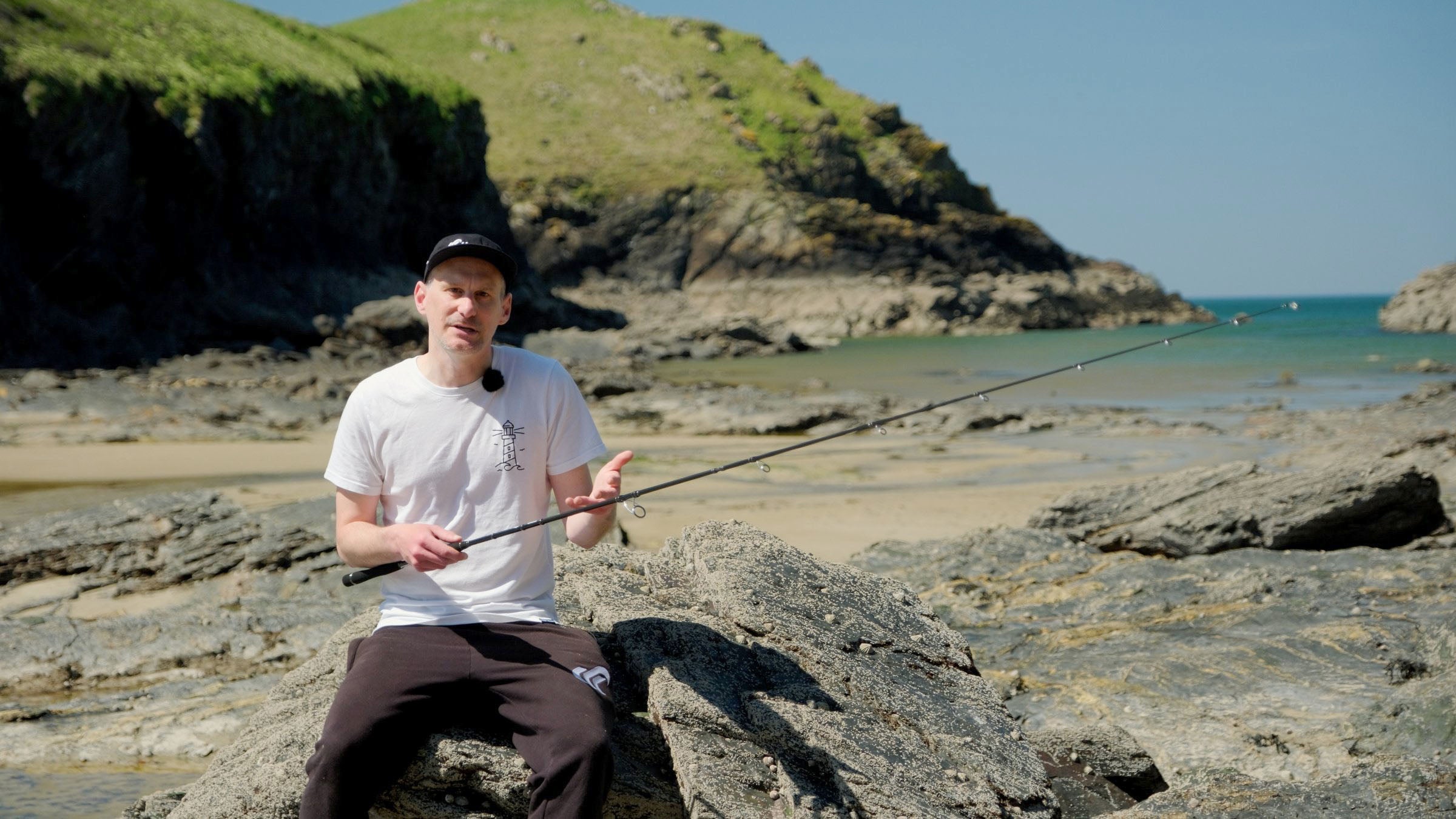
Rod weight is the weight of the rod itself, measured in grams. It is separate from its Casting Weight.
What the number means
For a bass rod, I'd open the usual idea of 120-140g up a little bit. More like 100-160g depending on the style and length of rod.
A longer, more powerful bass rod will generally weigh more than a shorter, lighter-powered one. So it needs reading alongside the Rod Length and what you want the rod to do.
Weight over a session
A longer rod can tire you faster. There is more physical weight, but also those longer sweeps take more effort individually.
That said, the number on its own is not everything. The rod still needs to be well balanced so that it feels light in weight. A light, balanced rod reduces fatigue over a full day.
Feel and build
The feeling coming back through the blank is ultimately incredibly important. There is obviously more to it as well though.
A good lure rod will have components that are both strong and lightweight. Especially for saltwater fishing, titanium frame guides and things like that are more corrosion resistant to salt.
Different rod styles
Squid rods can often be lighter in weight than equivalent bass rods, while still needing to be light and sensitive with enough lifting power.
Slow jigging rods tend to be longer and lighter than fast jigging rods.
Balance point
Balance Point is the point along a rod where it balances, measured in cm. I put more weight on this than the number written on the blank, because it often decides how light the whole setup feels in the hand.
Read it with a reel fitted
Without a reel on, no lure rod is going to balance on the reel seat or even particularly close to it. Once the reel is added, the balance point comes back towards your hand.
Even then, don't set expectations too high. With most lure rods, the true balance point will normally be somewhere in the first 10cm or so in front of the reel seat. To balance exactly on the reel seat, you would need the same amount of weight in front of your hand as behind it, and very few rods are designed like that.
Reel weight changes everything
A heavy reel on a light rod can bring the balance point very close to, or onto, the reel seat. A light reel on a heavier rod will leave it further forward.
Penn 3000 reels are heavier than a Daiwa or Shimano 3000, so they may need a heavier rod to balance nicely. Reel size is not really a fixed length rule either. It depends on the rod's power as well as its length and overall weight.
On the whole, a 3000 will suit a 9 foot rod and a 9 foot 6 inch rod will often sit better with a 4000. But a more powerful 9 footer rated around 45 or 50g could happily take a 4000, or even a 5000. A lighter rod rated around 30 or 35g is where the smaller reel would make more sense.
A little forward is normal
The further towards the tip a rod balances, the more tip-heavy it will feel. But a slightly forward balance is normal, and actually useful.
If you put enough weight on the reel to balance everything directly on the reel seat, the whole setup can feel dead and weird in the hand. Having the balance a little forward helps keep the feeling coming back through the blank.
That feeling is incredibly important with a lure rod. Balance matters because it helps the rod feel light, but it is not the only thing that makes a rod good.
Weight does not tell the whole story
Printed rod weights can be somewhat meaningless at times. A lighter rod can still feel heavier in use if its balance is further forward.
This is often why multi-piece rods can feel heavier in the hand than a one-piece, even if the actual weight is lower. Their balance is usually slightly further forward.
Fatigue over a full day
A tip-heavy rod can become tiring over a long session, especially with a longer rod. It puts extra strain on the wrist if you spend much of the day fishing with the tip up.
Shorter rods can get away with being slightly tip-heavy, particularly if you fish with the tip down most of the time. Nearly all rods will still be a little tip-heavy once rigged though. Perfect balance on the reel seat is almost impossible.
A light, well-balanced setup will reduce fatigue over a full day, but I would not chase an exact balance point at the expense of how the rod feels.
Adding butt weight
Adding weight to the butt will improve balance. I have used balancing weights before, and they can make a rod feel lighter because it is better balanced.
That said, I would not necessarily do it with a lure rod. It can also deaden the feeling coming through the blank a little, which rather defeats the point.
Reel seat position
Reel Seat Position is the measurement in cm for where the reel sits on the rod. It does not, on its own, tell you where the rod will balance.
Balance needs the reel
Without a real reel on the rod, you cannot expect it to balance on the reel seat, or even particularly close to it. Only once the reel is added would you expect the balance point to come back towards it.
What balance normally looks like
The true balance point will normally be somewhere in the first 10cm in front of the reel. A heavy reel on a very light rod can bring it very close to, or even on, the reel seat. A very light reel on a heavy rod will leave the balance point further forward.
Don't chase exact balance
I'd not set expectations too high about how close the balance point will get to the reel seat. It is nice when it gets close, but getting it exactly there is almost impossible. You naturally need the same amount of weight in front of the reel seat as you do behind it, and very few, if any, lure rods are designed like that.
Handle length
Handle length matters more than most people give it credit for, and it's one of the things manufacturers rarely print. The theory is the same across pretty much every style of rod, so it's worth understanding in general rather than chasing specific numbers.
Start with the simple version. A shorter handle is generally there to make working a lure easier. Everything sits closer to your wrist, so twitching a lure back takes less effort. Rods with short handles usually aren't built for long-distance casting — you might still cast two-handed, but you're not loading up and belting it for maximum range. They're for flicking lighter or sensibly-weighted lures out and working them back with less effort.
That only holds if the handle suits the rod. Too short a handle on a longer rod can leave it feeling tip-heavy and unbalanced, which works against the very thing a short grip is meant to give you. Instead of feeling light and easy to work, the whole rod feels heavier.
A longer handle gives you more leverage for casting. It lets you pull harder with your lower hand — the one gripping the butt — and that's the hand doing most of the work when you're casting for distance. It's the butt hand pulling in towards your body that drives tip speed, not the top hand pushing. Too short, and you lose the length of arc you can pull through.
There's a limit, though, and three things work against a handle that's too long for the rod:
- If it's too long, you can end up pulling the butt in too fast for the length and action of the rod, hitting the full power of the blank too early in the cast — and once you've hit that, you oddly start to lose it rather than gain from it.
- A long butt simply gets in the way. When you're working a lure around, it catches on clothing and becomes a nuisance.
- A longer handle eats into your tip length. Picture two 9ft rods, one with a 40cm handle and one with 50cm. On paper they're the same length, but the second has 10cm less rod out in front of the reel — and that's the bit that's working. Do the physics and you may actually be reducing tip speed on the cast even as the extra leverage lets you pull faster. Somewhere between the two there's a sensible compromise, and it's part of what a good rod designer is balancing.
Handle length also plays into balance. Put a longer handle on a rod and you move more of its weight behind your hand, which can make the rod feel lighter and better balanced held still. That's a nice thing, up to a point. Take it even slightly too far and you've got too much weight behind the hand and less feel coming through the tip — so it unbalances the other way.
A lot of personal preference around handle length actually comes down to how you hold the rod in the first place. If you hold the reel seat further back — say one finger in front of the reel foot instead of three — your hand sits a couple of inches further down the rod, and suddenly a handle that would have been perfect feels short. It's one reason I'm slow to blame a rod's handle length: because people hold rods differently, there almost can't be one perfect length. There's more to say on how to hold a rod, and it's worth its own explanation.
It's part of why we like stocking a range of brands. Everyone's a different size — we're a tall nation over here, and the length of a rod handle is a genuinely common complaint in the shop — and every brand has its own ideas about grip length. Between them there's usually something that suits a particular angler's build and style.
I'd also gently defend the manufacturers. It would be a bad decision for any brand to hang an abnormally short handle on a rod and leave it unbalanced, and the good ones don't. The Japanese brands especially always have a reason for what they've done — I've asked them directly. Where you do see handle lengths that look plain wrong, it's usually a cheaper rod that's been thrown together without much thought, and getting the handle right is one of the things that gets skipped. Occasionally a specialist Japanese rod will carry a very short or very long handle for a very particular purpose; that's not them getting it wrong, it's just a design decision we might not immediately understand.
If a handle length is putting you off a rod, or you're not sure what'll suit you, come and see us if you can, or ask through the Rod Finder — happy to talk it through.
How to hold a lure rod
There's one thing about handle length that I see fairly often and that anglers aren't always aware of: how you hold the rod in the first place — both around the reel and around the butt end when you're casting — has a big effect on what handle length actually suits you.
At the reel seat: one finger behind the reel foot, three in front
I believe, and always have, that this is the better way to hold a rod. It'll be controversial and not everyone will agree, because ultimately it's about being comfortable — but there are real technical reasons for it. As is nearly always the case for our fishing in the UK, the reel is heavier than the rod. Holding it with three fingers in front of the reel foot and one behind puts most of your strength, hold and grip in front of where the main weight is, so the combined weight of reel and rod sits in the stronger part of your hand. Your little finger isn't your strong point; your index finger is your strongest, which is why some people think it's fine to have just one finger in front — but combine the index with your middle fingers and you get that extra strength and grip, with massively improved balance, making fishing easier and more comfortable. Most reel seats — Fuji reel seats and their ergonomics included — are designed to be held exactly this way.
If instead you hold with your fingers behind the reel foot, or one in front and three behind, you're putting the weight of the reel forward of your hand. Every time you twitch the rod you're lifting that reel weight out in front of you, which puts far more strain on your wrist and unbalances the rod. The further back you hold, the more weight sits in front of you, worsening the balance and making life harder.
How your grip changes the handle length you need
This is the bit that surprises people. If you hold the reel further back — say only one finger in front of the reel foot — you naturally put your hand a couple of inches further back down the rod than someone holding it three-in-front. Suddenly a handle that would have been the perfect length for you feels two inches short, and you find yourself needing a longer handle to compensate. So the way you hold the rod quietly dictates the rods that suit you, and it can actually minimise your choices. It's one of the reasons I don't like to blame the rods themselves — because people hold rods differently, there almost literally can't be one perfect handle length.
The rear hand
The same applies at the butt. I'm happy holding the rear of the rod with one or two fingers, depending on the weight of the lure and the length of the rod. If a handle feels short even to me, I don't mind pulling it in towards myself with a single finger on the butt — I feel strong and happy enough to do that with anything but a very powerful rod. Moving my hand two or three inches further back gives me the extra handle length I want for casting, while keeping the handle effectively shorter for when I want to work a lure — the best of both worlds, as long as you're happy in your head holding the rear with less than a full hand. You don't realistically need every finger on the rod to pull it in powerfully, unless you're casting a heavy lure on a heavy rod. For most of our bass fishing or LRF, one to two fingers does the job. But if you went to the extreme — reel held right back with zero fingers in front and four behind, and a full-hand grip at the rear as well — you'd need a very long handle, and as covered on the handle length page, going beyond what's technically sensible for a rod really can work against you.
I find it hard not to plead with people to look at how they hold a rod, because it affects your casting, your working of lures, and all the things that actually matter for catching more fish. But above all I want people to enjoy their fishing and the tackle they use, so I'm happy to let people be — I'm not here to force anyone, because ultimately you've got to be comfortable. I just wanted to explain the technical reasons, because holding the rod the right way really can maximise your fishing.
Handle design
You get so much handle design now that revolves around cosmetics — little rings, screw-lock covers, all that sort of thing. Occasionally that means a rod is uncomfortable to hold in the way I'd suggest holding it: not unbearable, but not ideal. When the wrong components end up in the wrong order, chosen to look cool or to be different, comfort suffers. That's where I see a fault in the rod design. They've tried to be clever or different without thinking about anglers — and it's not going to make me change my grip, because the grip is correct.
When brands don't think about anglers and actual fishing — which sounds stupid given they're fishing brands — you get items that are thrown together and not properly considered. That really annoys me, and that's where I'd blame the manufacturer. Not because it disagrees with what I believe: what I believe I know to be factually true from a physics point of view. It's because they're breaking a level of trust we should all be able to have with people who are apparently professionals at what they do.
For anglers who've reached the level of knowing what they want, what they need, and even understanding design, it matters less — you can work around it and find rods that do what you want, the way you want. What concerns me is everyone else. The vast majority of anglers don't have the confidence to know the difference. They're told by the manufacturer that “X rod is the best thing for what you do,” so they buy it — and then find it unenjoyable. That angler could very well stop being an angler at all. That's what upsets me: not a spec on a page, but someone put off the whole sport because a rod was built for looks instead of for them.
None of that is a reason to be nervous about handle design — plenty of brands get it right, and the ones we deal with think hard about how a rod is actually held and fished. It's just worth knowing what you're feeling for when a handle doesn't sit right in your hand. If one's putting you off a rod, ask us through the Rod Finder and we'll talk it through.