




Offshore
Offshore lure fishing is a different scale of fishing — deeper water, bigger fish, gear built to put serious load through the rod and reel. Most of it happens on charter boats or private vessels working over reef, wreck or open ground beyond shore range.
Rod ranges for Offshore

Frequently asked questions
What is offshore lure fishing?
Boat-based lure fishing in deeper water — typically 30m+ deep, often 100m+ for serious offshore work. Targets in UK waters include cod, pollack, ling, coalfish, and sometimes deeper bass and pelagic species. The dominant techniques are vertical jigging (slow pitch and conventional), drift fishing with soft plastics on heavy jigheads, and targeting structure with bigger lures. Different gear from shore or inshore boat fishing — heavier rods, heavier line, bigger lures, stronger reels.
What rod for offshore lure fishing?
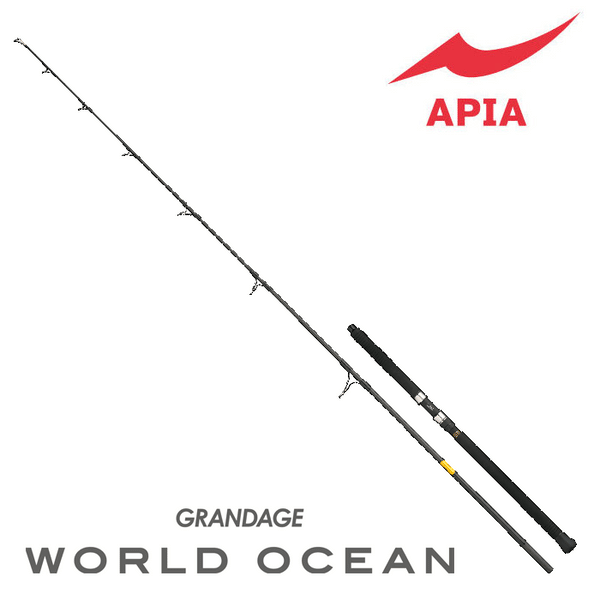
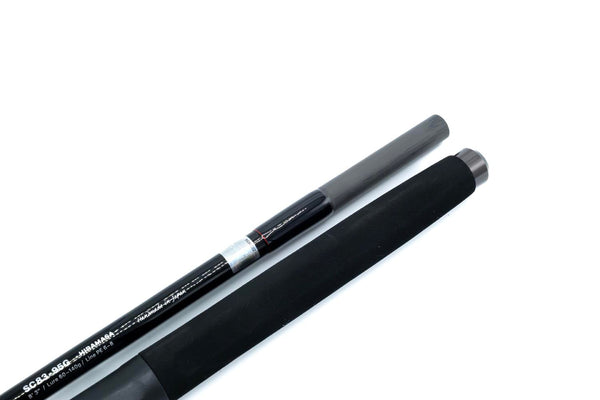
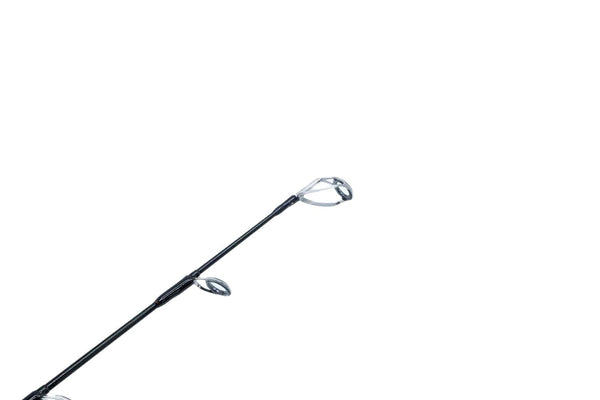
Specialist offshore boat rods, typically 5'6"-6'6" for jigging work, rated to 100-300g+ depending on the depth and lure size. Strong butts for lifting fish from depth, controlled tip for working jigs vertically. Different rods for different techniques — slow pitch jigging rods are very different from speed jigging rods, and both differ from drop-shot or bottom-fishing soft-plastic rods. Worth getting tackle specific to the technique rather than trying to cover everything with one rod.
What's the difference between offshore and inshore boat lure fishing?
Mostly depth and distance from shore. Inshore boat is typically within a few miles, depths under 30m, lighter tackle, often the same lures and techniques as shore lure fishing scaled for boat work. Offshore is further out, deeper, heavier tackle, dedicated jigging or bottom-fishing techniques. Different boats too — offshore work usually needs a charter or a properly equipped private boat with the safety gear and fish-finding electronics for deep-water fishing.