






Casting weight
Casting Weight, shown in grams, is the maker's guide to the lure weights a rod is intended to cast. I look at it early when choosing a rod, but never on its own. It is mainly about how the rod casts, not simply how much feel it has.
It is a guide, not a formula
A 10g to 30g rating does not mean the rod will automatically cast best with a 19g or 21g lure. There is no made up number that works across every rod.
Ratings are not always completely trustworthy, and every rod has its own point where it starts to feel comfortable. That depends on the rod itself, its action, power and build, rather than a calculation from the printed figures.
The stated maximum can be especially misleading. As a general rule, I would probably take 10% to 20% off the top of most rods if I wanted them casting comfortably when the wind picks up a little. It does depend on the brand though.
A 35g rated rod being used mostly with 30g lures makes good sense. You do not want 30g to be the actual limit of the rod if you need to cast it properly into a breeze.
The rod has to bend
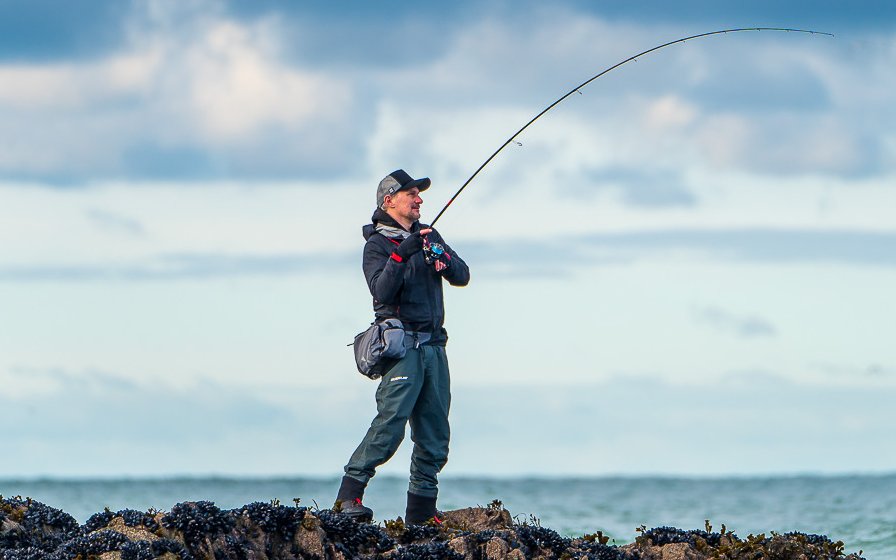
A rod needs to bend in the cast, then recover quickly, to help propel the lure towards the water at maximum speed.
If there is not enough weight on the end of the line to put a bend into a stiff rod, the angler is not getting that help from the rod's recovery. That is why a very stiff rod can struggle to cast lighter lures properly.
At the other end, put too much weight or power into a cast and a rod can start to feel a bit spongy. Distance can decrease again and things just are not working right.
It is also why overloading a rod is a bad idea. Too much weight puts extra strain through the blank and can cause breakages. Thinner line does not give you permission to cast heavier than the rod is rated for. It is nothing to do with line diameter.
A more powerful rod does not automatically become useless with lighter lures either. A rod rated to 80g can still cast a 30g lure properly in the right build. This is why casting weight has to be read as part of the whole rod, not as a hard prediction of what it will feel like.
The top and bottom figures
Fishing right at either extreme of a quoted casting weight rarely gets the best out of a rod.
Most people do not need more than about 30g for normal bass fishing, even when conditions are getting rough. Normally the sea scares people off before there is an actual need to go much heavier. Most bass lures are roughly 12g to 23g, with the odd heavier one needed for rougher conditions.
The lower figure is worth treating carefully too. I often say there are too many variables for a maker to decide the minimum lure weight somebody should use. Line diameter is the biggest one, plus the conditions on the day. A rod rated from 7g to 35g will rarely be fished at its true minimum in a normal bass session, as few people are regularly using lures below about 14g.
A lighter rating can make it easier to cast small, light lures, but it still needs a rod that recovers quickly. Feel can improve with a lighter rating, although carbon quality, tip design and the guide system can matter far more. A rod with lots of small guides can transmit a huge amount back through the blank, but that sort of thing tends to sit at the higher price points.
Casting weight is not power
Casting Weight gives a rough idea of power, but it does not tell you the whole story.
Power is how much weight it takes to bend a rod. A heavier power rod needs more weight to reach the same bend. Action is where and how that rod bends. Both change how a casting rating feels in real life.
The L, ML, M and MH markings can give a rough idea too, but there is not much consistency between brands. Action can be more important than the letter on the blank, and physical rod weight is another thing to consider. I would not choose a rod purely because it says ML or M.
Rod Taper and action and Rod Weight help explain the bits that Casting Weight cannot tell you on its own.
A useful bass all rounder
A few years ago, 10g to 30g was probably the standard all round rating for UK bass fishing. These days I would say 10g to 35g is more like it.
For mainstream bass fishing, ratings are far more varied than one fixed number. Roughly 20g to 50g covers a lot of the usual rods, with occasional reasons to go lighter or heavier. But if I was going to own one casting rating on a bass rod, something around 10g to 35g would be a very sensible place to start.
An 8ft to 9ft rod rated around 6g to 30g or 10g to 35g covers most UK bass lure fishing. Around 30g to 35g is a good upper rating for an all rounder because it leaves some room at the top when it is needed. You can fish a lighter lure on a heavier rod, but you cannot fish a heavier lure on a lighter one.
I would not normally start a complete beginner on a rod rated only to 28g now. A 35g rod makes more sense, or possibly 40g depending on where they live. If rougher seas are part of the local fishing, I would have to lean towards 40g.
A rod around 8ft to 9ft rated up to 40g will probably cover about 90% of what somebody getting into bass fishing needs. The lures may not weigh 40g, but having a little extra power available gives you scope when the wind is in your face or conditions change.
Match it to the fishing
The rod needs to suit the lure weights you will mostly use and the marks you actually fish.
For calmer conditions, an 8ft rod can be lovely. Around 9ft starts to make more sense on the open coast or in slightly rougher conditions. Rods around 8ft 6in or 8ft 8in make very good all rounders, and 8ft 6in to 9ft is probably the more typical shore length these days.
A longer rod of 9ft 6in or more, often rated 40g and above, is more of a powerful tool for distance, surf fishing or windier, horrible conditions. On rugged coastline or in rougher seas, a 9ft rod rated around 35g to 40g is often more useful than going lighter. It is always handy to have a few extra grams of power available when the wind gets up.
At the lighter end, rods around 7ft 6in to 8ft 3in do not all have to stop at 21g. Ratings of 24g, 28g and 32g can all make useful lighter bass rods. An LRF rod may be rated to 10g or less, which is a completely different job again.
For somebody uncertain whether they will fish from a boat one day and shore the next, an 8ft rod is a good compromise. Dedicated boat lure rods are generally shorter, around 7ft to 8ft.
If one rod genuinely has to cover bass, perch, pike, mackerel and some inshore boat fishing, an 8ft to 9ft rod rated around 35g to 42g is a very useful compromise. A rod rated to 40g is a sensible broad all purpose choice, as long as you understand that one rod will always have limitations somewhere.
Pairing the reel
Casting Weight affects reel choice because power, length and balance all work together.
For a typical bass rod around 8ft 6in to 9ft rated to roughly 35g, a 3000 size reel is normally right. On rods rated 40g and above, particularly over 9ft, I would more often go to a 4000.
There are exceptions. At 8ft, I would still put a 3000 size reel on a 40g rated rod. At 50g, I may step up to a 4000. A more powerful 9ft rod can sit very happily with a 4000, or even a 5000, so power and balance matter as much as length.
A 9ft rod rated around 30g to 35g is normally a 3000 size reel job. A 45g or 50g 9ft rod would benefit from a 4000. At the lighter end too, the reel still needs to balance the rod properly.
Rod Length and Balance Point are useful alongside this figure.
Use the number as a starting point
Casting Weight is one of the most useful figures on a rod spec table, but it is not a complete answer. Think about the weights you will mostly cast, leave yourself some room for tougher conditions, and then consider the rod's length, action, power and balance.
If you are unsure about pushing a rod close to, or beyond, its stated maximum, ask me before you buy.
Lure weight
Lure Weight is the figure in grams that helps match a rod to the weights you are likely to fish.
Reading the numbers
Most bass lures we use across the country are about 12 to 23g. A rod rated to 30g or 35g suits those lure sizes well. It is only with the odd metal lure, or in very rough conditions, that you would typically need to go heavier.
I would not tell people to dwell too much on the minimum rating. It can tell you a little bit about the rod and its action, but the upper rating is normally the more useful starting point.
General bass fishing
For anybody with a little bit of experience, I would say a rod rated to 35g as a maximum is a great all-round weight for bass plugging.
An 8 to 9 foot rod rated around 30g or 35g covers most UK bass fishing. It can depend a little bit on where you are fishing as to whether 30g or 35g is the better fit. For anglers with less experience, I would even suggest upping it to possibly 40g.
An 8 foot rod is great if you are mostly fishing calmer conditions. A 9 foot rod is great if you are on a little more open coast or in slightly rougher conditions. Rods around 8'6" or 8'8" make great all-rounders.
Soft plastics
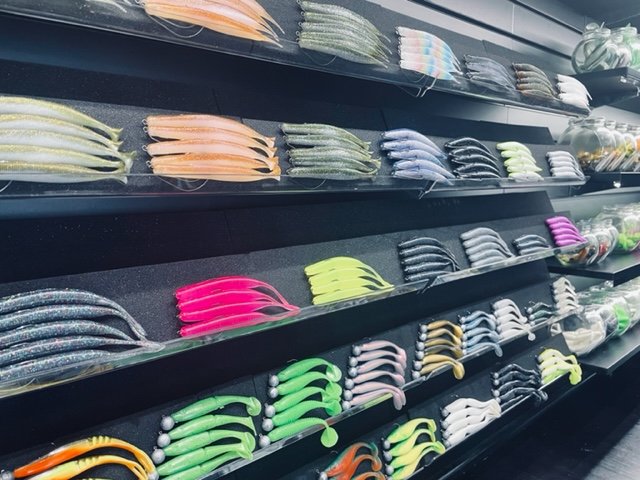
On the whole, a rod rated from about 3g to 30g is a good choice if you mainly fish soft plastics. For weedless, weightless or lightly weighted presentations, a 30g rod is the correct pick most of the time.
Some of the larger soft-plastic shads with weighted heads can easily exceed 20 to 25g though, and can put a 30g rod under excessive strain on occasion. A 35g rated rod is much better for those.