





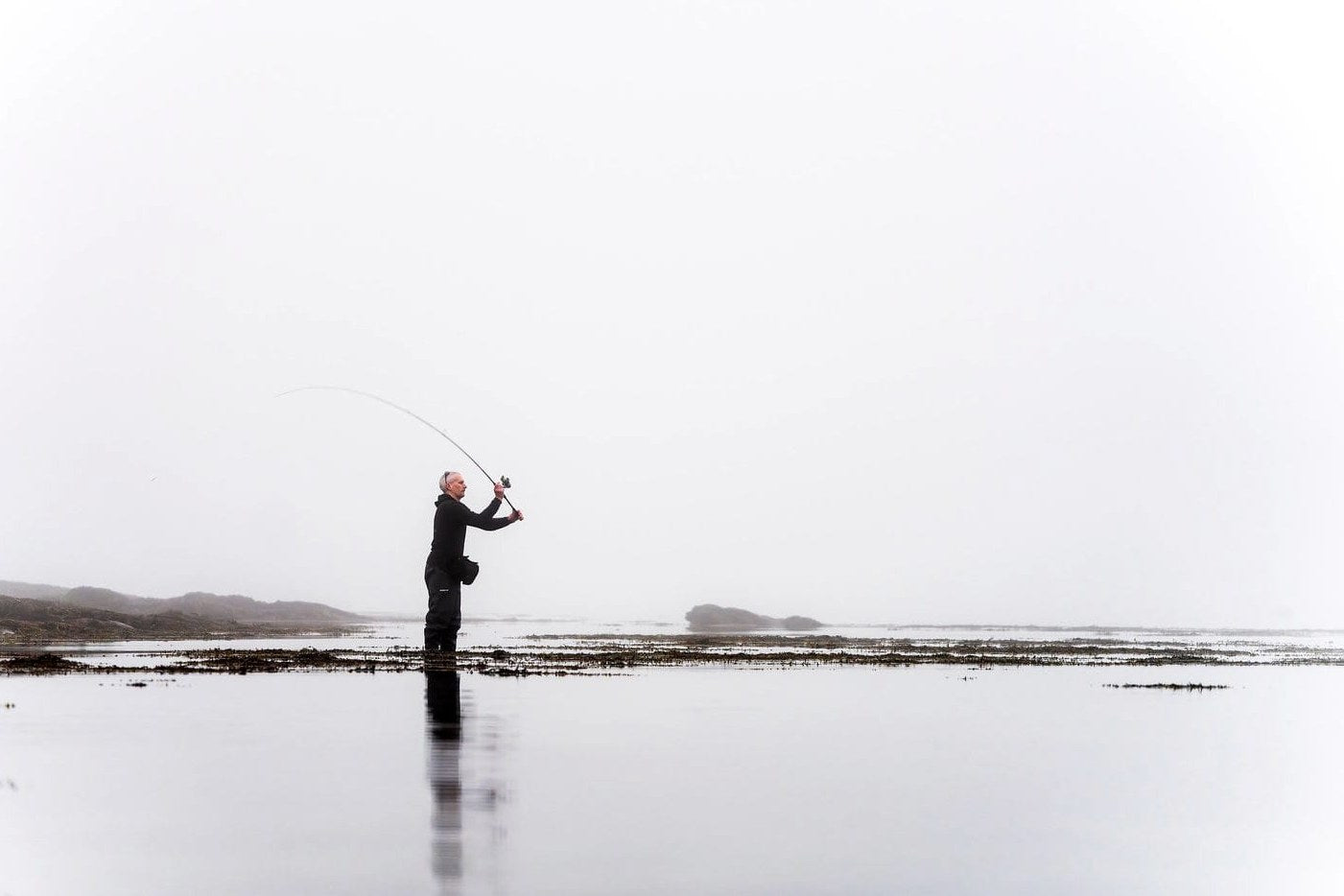
Rod length tells you how much reach you have, how direct the rod feels and, potentially, how far you can cast. It does not tell you how powerful the rod is on its own. A 9' rod can be built in hugely different ways, so length is one part of choosing a rod rather than the whole answer.
Reading the number
Rod length is normally shown in feet and inches. An 8'6" rod is eight foot six inches long.
For UK bass fishing, rods broadly run from around 7' to 10', though few anglers will actually fish as short as 7' from the shore. The useful middle for most shore bass fishing is 8'6" to 9'. That is solely bass specific though. Different types of lure fishing can suit very different lengths.
Length and casting distance
A longer rod can give you more tip speed for the same amount of effort, which can mean more distance. But it is not black and white.
It is only really easy to compare length if you have two rods built from the same materials and to the same sort of design. A shorter rod with very fast recovery can outcast a longer rod with a sloppier, softer feel.
For a properly long cast, the blank needs to bend and power up in the right way, then spring straight back after the cast. If it is wobbling and flapping about for too long, the line is creating more friction through the guides and distance is lost. Extra length on its own does not guarantee dramatically longer casts.
Length does not give a rod more power either. That comes from other parts of the rod's design. Have a look at casting weight and rod taper and action alongside length, rather than assuming a longer rod is automatically a heavier one.
Shorter rods and control
On the whole, a shorter rod gives more direct lure control. There is less carbon and material between your hand and the rod tip, so vibration has less distance to travel back through the blank. If you compared like for like rods at two different lengths, the shorter one would be more sensitive too.
For close-range fishing, precise bottom contact and working a lure accurately, shorter is always better if it can be done with no compromise. A rod around 7'6" to 8'3" can be lovely for close bass work, tight rocky ground, harbours and small coves. Bass anglers can even go down to around 7' when maximum control and feel matter most.
That does not mean a short rod gives better control in every situation. If there are rocks, weed, bankside foliage or other structure in the way, a longer rod can give you the reach to manoeuvre around it. It depends what sort of control you actually need.
Shorter rods are generally nicer to use for a long session too. A longer rod has more physical weight, but the longer sweeps also take more effort individually.
The allround bass length
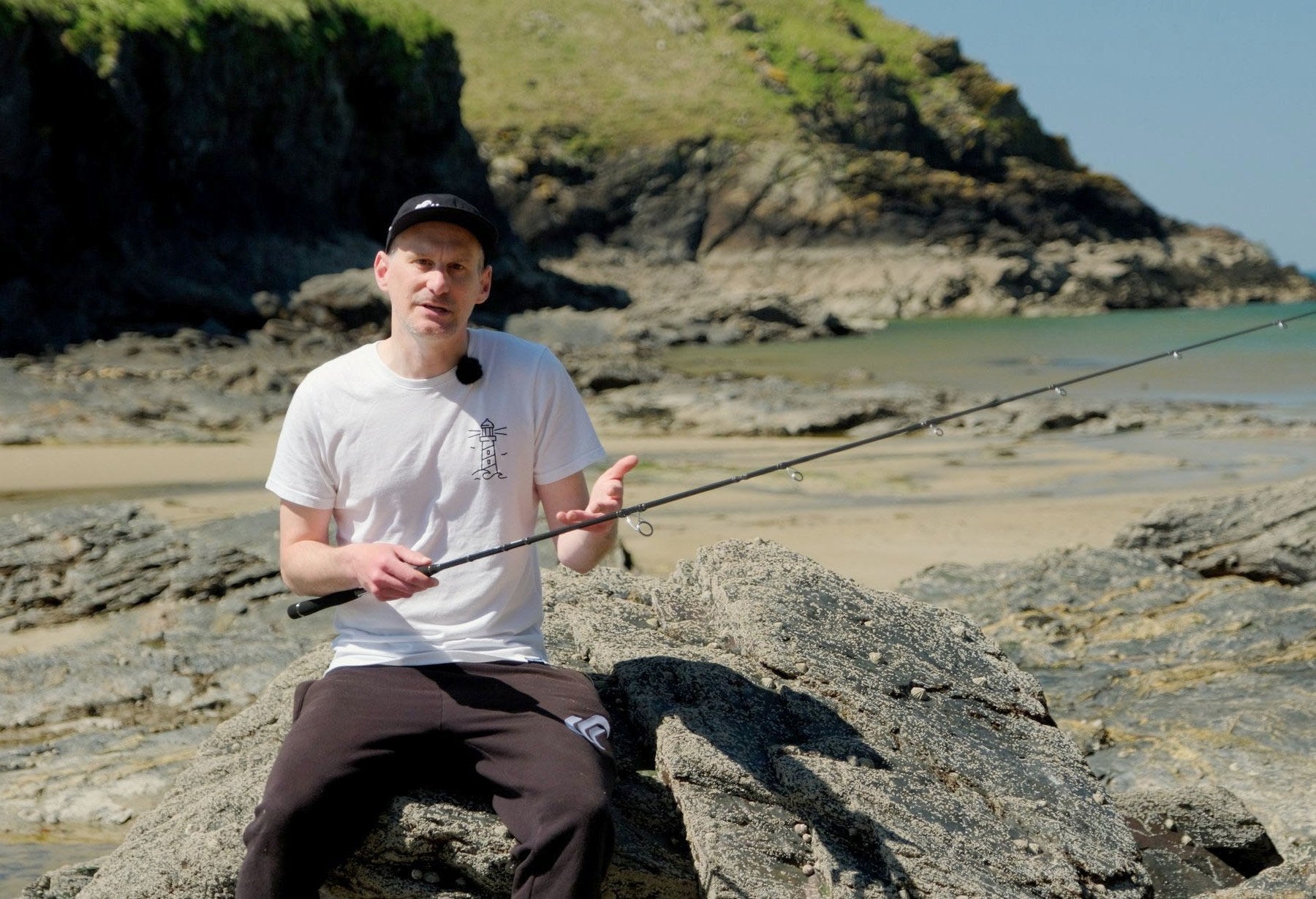
For bass fishing from the shore, 8'6" to 9' is the length I would call the nice average. A 9' rod is pretty much the ideal allround length for most UK bass anglers, balancing casting ability against accuracy, comfort and the mobility that makes lure fishing so good.
An 8' rod is great in calmer conditions, and it is a good choice if you might be on the boat one minute and the shore the next. An 8'6", 8'8" or 9' rod starts to make more sense if you fish more open coast or slightly rougher conditions.
A typical dedicated bass setup these days is more likely to be an 8'6" to 9' rod rated to approximately 35g with a 3000 size reel. Length should not be used to guess the rating though. A shorter bass rod might be rated to 24g, 28g or 32g, while rods over 9' can vary hugely as well.
When to go shorter
Boat lure fishing is the obvious one. Around 7' to 8' is ideal on the whole, with 8' usually about the maximum I would recommend. A 6' rod would be doable from a very small boat, but 7' is a better minimum as it gives you slightly more movement with every lift or sweep.
A 7' rod is also useful from close-range estuary ground or tight rocky marks where reach is less important than direct control. It is a specialist bass length though, rather than a default choice if you are uncertain what fishing you will be doing.
When to go longer
The first reason to look at a rod over 9' is normally extra distance. After that, longer rods earn their place on surf beaches, open coast, high marks and anywhere you need extra reach around nearby structure.
A 9'6" or longer rod is often more of a tool for distance, surf fishing and windier, horrible conditions than a general allrounder. Many are rated 40g or above for bass fishing, but that is not a rule. Do not put every 9' plus rod into the same category.
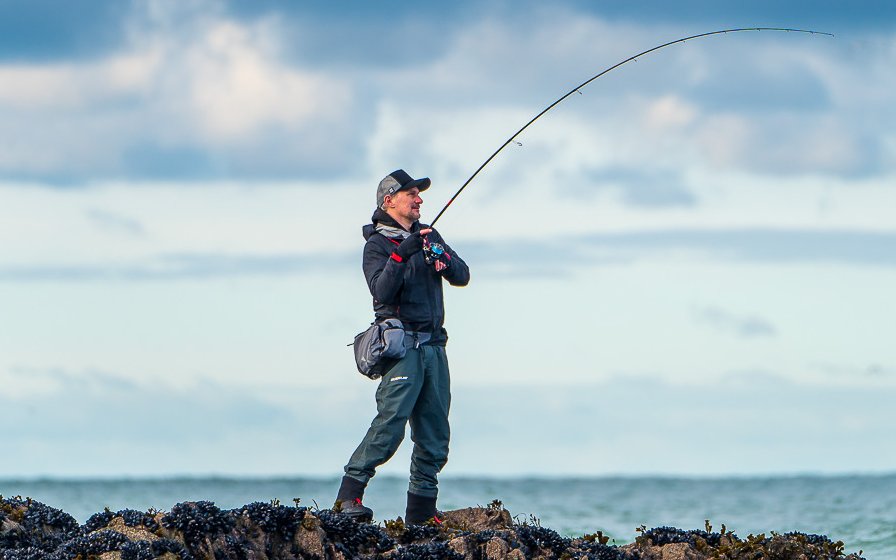
In rough water, a 10' rod can be particularly useful because it lets you stand further back from the sea, or a little higher above it, while still keeping the tip down close to the water. That keeps more line in the water, helps keep it out of the wind and allows the lure to swim more steadily.
Longer rods can help around rocks, weed and bankside foliage as well. Sometimes the extra reach is useful even when the structure is very close to you.
Height, wind and line control
A longer rod does not automatically make line control better. A short rod is generally easier to control as a whole.
The exception is often rough or windy conditions. If you need to stay safely above swell, a longer rod can let you stand further back while keeping the tip low. That can make the fishing much more manageable.
From high or steep ground, length brings the same benefits it does elsewhere. More distance and occasional manoeuvrability. A shorter rod is still less tiring and generally nicer to use, so I would not choose extra length unless it is solving a real problem.
Reel size alongside length
Reel size is about the rod's power and length together, not length alone.
For an 8'6" to 9' bass rod rated around 35g, I would normally put a 3000 size reel on it. Once you get to 40g plus and over 9', a 4000 starts to make more sense. At 8', I would still put a 3000 on a 40g rod. At 50g, I may step up to a 4000.
LRF, jigging and other uses
For LRF, the most-used rods tend to run from 6' to around 7'6". An 8' rod is useful, but more rarely needed. If you are fishing from harbour walls or anywhere above the water, I strongly believe in using at least 7'. It lets you keep the tip closer to the water, helps with wind, and gives you more reach to pull a hooked fish outwards from the wall.
Short LRF rods can be great fun when you can get close to water level. Every movement feels directly in your hand. They have limitations though, especially from high ground. Around 7' can be the most versatile place to start if you do not know exactly what your fishing will involve.
Boat jigging rods are typically around 6'. Shore jigging rods are generally longer, around 2.7m to 3.1m. Slow jigging rods also tend to be longer and lighter than fast jigging rods. For bass trolling, a 15lb-class rod or a lighter spinning blank around 8' can work well.
Choosing between two lengths
Start with where you will actually fish. Close-range, calm water and tight ground normally point shorter. Open coast, surf, wind and needing more reach normally point longer.
If you are mainly shore bass fishing and want one rod to cover as much as possible, 8'6" to 9' is probably where I would start. If you are unsure between two lengths, ask me before you buy.