




Rod Taper
Taper is how a rod bends — where along the blank the bend actually sits. In the UK most of us, and most of our customers, use “action” and “taper” to mean much the same thing. Strictly, taper is the physical shape of the blank and action is how it behaves, but you'll hear them used interchangeably, and I'll mostly say action here.
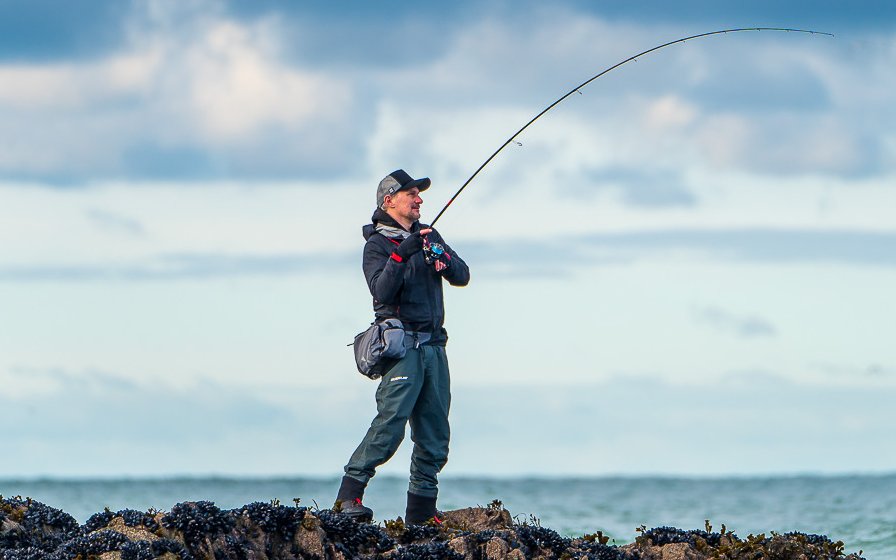
Rods run on a scale from slow, through regular and fast, to extra-fast. A slow, or parabolic, rod bends progressively through its whole length. An extra-fast rod is tippy — a bendy tip sitting on a much stiffer butt.
Slow actions, as long as they're not just floppy, do two things well: they cushion a cast, and they let you play a hard-fighting fish on light line without pulling the hooks. It's why trout anglers reach for something soft and through-actioned — when a fish is throwing its head and jumping, the rod soaks all that up and protects a light line. They're also, honestly, a lot of fun. A rod that hoops right over and bends down into the handle is a thrill, even if it isn't the sharpest tool for the job.
At the other end, an extra-fast rod is built for delicate work. A stiff blank with a fine, light tip lets you move a lure with very little effort — flick it, twitch it, work it back — which really comes into its own with very light lures and ultra-light fishing. That fine tip also helps you actually hit a fish when it bites; a rod that's too soft can struggle to pull a hook home, especially at distance. Zander are a good example of where extra-fast earns its place: a finicky predator that often wants a small, light lure, but can be a big, bony-mouthed fish you then need to bully — the light tip gives you the finesse, and the power kicks in just behind it to set the hook and control the fish. The trade-off is a narrower window. Extra-fast rods aren't the best casters, particularly with lighter lures, and they tend to have a smaller sweet spot of lure weights they really suit.
For most of our lure fishing, fast action is the all-rounder. A good fast rod has a fine enough tip to fish down at the lighter end of what you want, but enough stiffness through the top half to work a bigger lure back as well. It casts across a wider range of weights than an extra-fast, and it recovers quickly — which matters more than people realise.
That recovery is worth understanding. When you cast, the rod bends and loads, then has to spring back straight fast, so the line runs cleanly out through the guides rather than slapping its way through a rod that's still waving about. Cheap carbon can't do that well, and the problem gets worse the longer the rod. It's the main reason a slower, regular action only makes a good distance rod when it's built from decent material — the blank has to recover, and that takes better carbon and a cleverer design.
Regular actions aren't something we sell a lot of. They come into their own for long-distance casting and for softer playing of fish, much like the trout rods, but for that you generally want a longer rod and enough quality in the build to make it work. Below about £150, or under 8ft, you're usually better off with a fast action — a slightly faster taper recovers more readily even in a cheaper blank, and there are some genuinely lovely-feeling rods at sensible money these days. We mostly stock regular actions in the longer, higher-spec ranges.
One thing trips a lot of anglers up: stiffness and fast taper aren't the same thing. A rod can feel light, stiff and crisp in the hand — anglers often call it “steely” — without actually being fast. That feel comes mostly from high-grade carbon and a light blank, not from the taper. Plenty of people tell me they love a fast action, and when you look at the rods they actually love, the taper often isn't especially fast at all; it's the steeliness they're drawn to. The two get muddled constantly, and they're doing different jobs. The real measure of a taper is in the diameters — how fine the tip is compared to the butt, or more tellingly the diameter at that first joint. A fast rod has to start fine at the tip to taper out to the butt; a rod with a surprisingly thick tip can still feel steely purely because it's light, high-grade carbon.
None of this is worth agonising over on the bank. Understanding the theory just helps you choose the taper that suits the job — and enjoy the rod you end up with. If you're not sure what action fits your fishing, ask us through the Rod Finder and we'll point you somewhere sensible.