Put-over is the inverse of put-in — one section's expanded female end slides over the other section's reduced male end. It's less common than put-in on lighter rods but turns up regularly on heavier shore rods, jigging rods, and some travel-rod designs where the joint needs to take significant load.
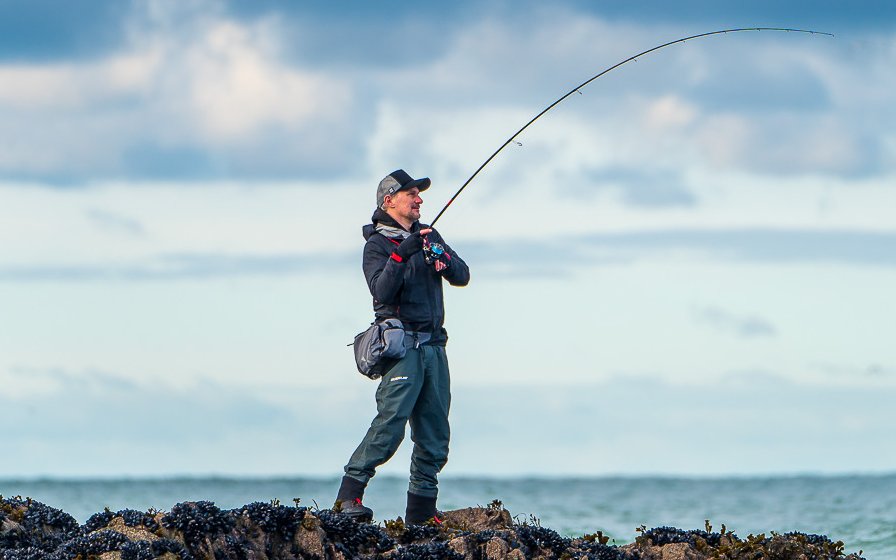
What the put-over offers is robustness. The female sleeve sits over the male section with more surface area in contact than a put-in equivalent, which means the joint takes lifting and lateral load better. For a rod that's going to be bent into deep curves under heavy fish — proper big-fish jigging work, heavy shore rods leaned into a 5kg bass on a rocky mark — that extra joint strength is worth having. The trade-off is that the joint can feel slightly stiffer through the join than a put-in or spigot, because there's more material in the way at the seating point.
The other place you'll see put-over joints is on multi-piece travel rods, particularly four-piece designs. The stacked joint forces are higher in a four-piece than a two-piece, and put-over joints distribute that load more comfortably than put-in equivalents. A well-built four-piece travel rod with put-over joints will feel close to a two-piece in use, with the obvious advantage of fitting in a piece of carry-on.
Care is similar to put-in — keep the joints clean, a touch of joint wax to seat properly, check occasionally for play. If the seating starts to loosen, the female end is the easier of the two sides to address.
Any questions about put-over rods in the range, drop us a line.